
What is Shockwave Therapy?
Shockwave Therapy is a non-invasive treatment using high-energy acoustic waves to target stubborn musculoskeletal conditions. It has gained widespread attention in the medical world for its ability to promote healing and pain relief in chronic injuries that haven’t responded to other treatments.
Often used for:
Plantar Fasciitis
Achilles Tendonitis and Tears
Shin Splints
Heel Spurs
Chronic Soft Tissue Injuries
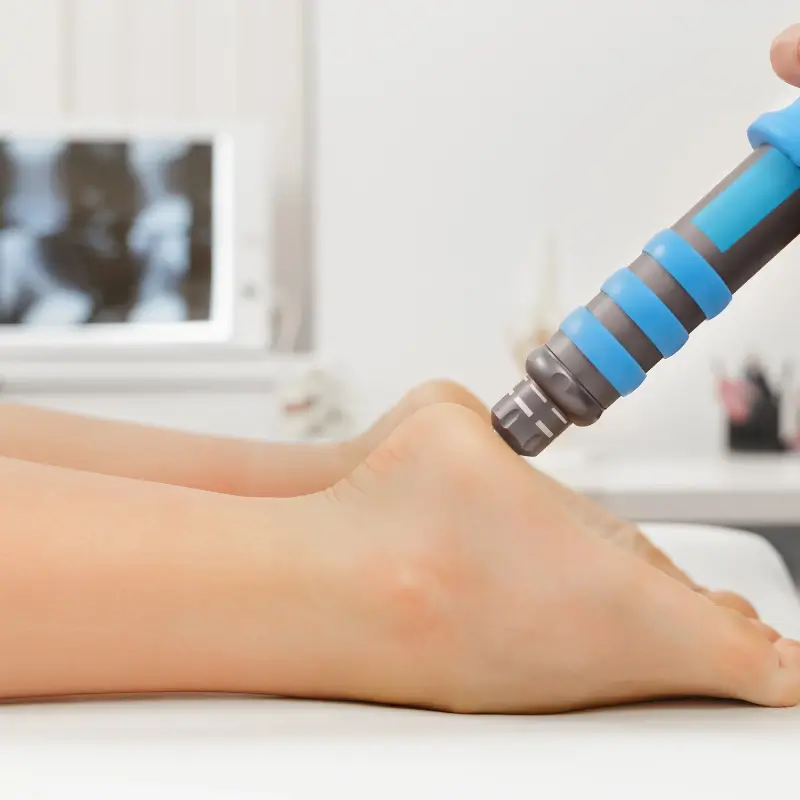

How Does Shockwave Work?
Like Ripples in Water, Shockwaves Stimulate Healing
Imagine dropping a stone into a still pond. The ripples that spread out represent how shockwaves move through your tissue — reaching beyond the surface to stimulate deep healing.
Just like ripples, shockwaves spread energy outward, targeting both the injury site and surrounding tissues.
This gentle wave action triggers the body’s natural repair response, similar to how ripples disturb still water and create movement.
Over time, the repeated waves help reduce pain and stimulate new growth, improving how the tissues heal and function.
Most people start noticing improvement within 5–7 sessions, as the body responds to this consistent, wave-like stimulation.
What Does THE Treatment Involve?
Quick sessions (10–20 minutes)
No anaesthesia needed
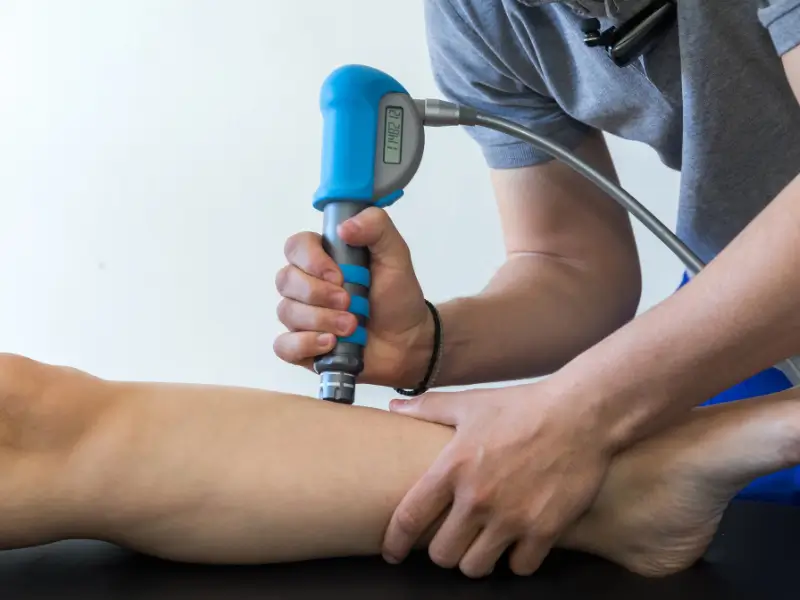
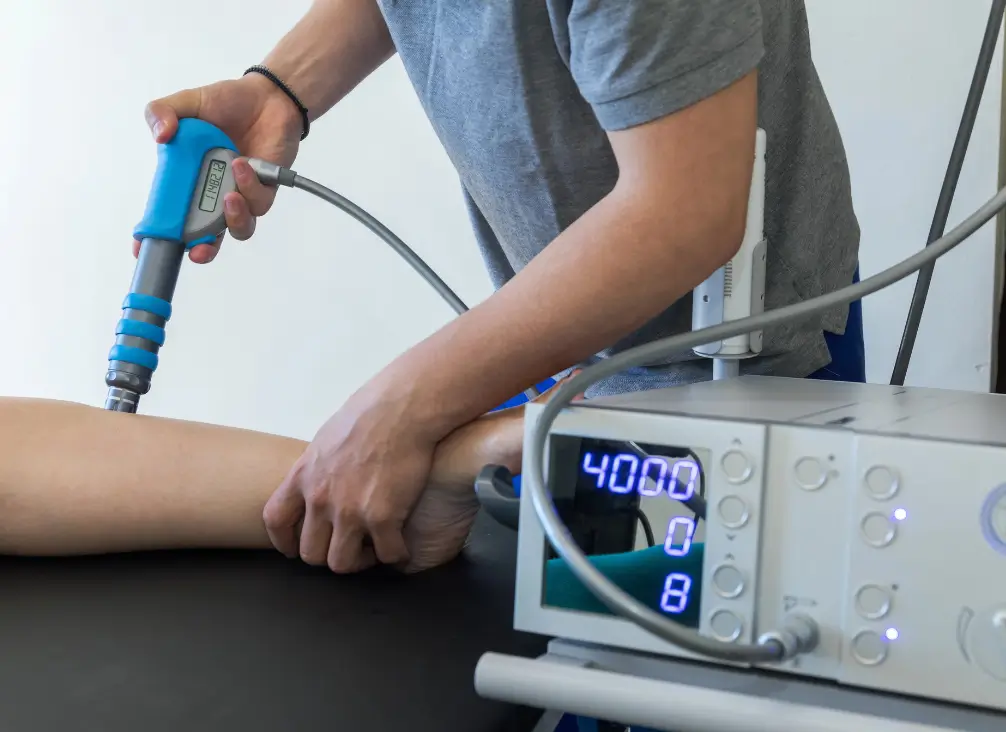
Delivered using a handheld device to target specific areas
Non-invasive with no downtime
Shockwaves penetrate 3–5 cm beneath the skin—and up to 7 cm with specific settings—making them effective for reaching deeper tissues, even in individuals with a larger build.
Shockwave vs. Traditional Treatment
Compared to rest, ice, stretching, or even steroid injections, Shockwave Therapy offers a promising alternative when other conservative methods fail.
This advanced technology can:
Stimulate tissue remodelling by promoting the breakdown of disorganised scar tissue that restricts movement
Encourage realignment of muscle and tendon fibres, helping restore natural movement and flexibility
Reduce pain sensitivity by targeting nerve fibres and lowering levels of Substance P—a chemical linked to pain signals—without relying on medication
Instead of masking pain, Shockwave Therapy works to restart the body’s own healing process—offering real hope when conventional options haven’t worked.

Who Should Avoid Shockwave Therapy?
Shockwave Therapy is not suitable for:
Pregnant women (due to the lack of safety research and the body’s heightened sensitivity during this time, treatment should be postponed until after birth as a precautionary measure).
Children under 18 (except for Osgood-Schlatter)
People with tumours, infections, or thrombosis
Individuals with blood clotting disorders or on anticoagulants
Recent cortisone injection in the affected area
Common Questions About Shockwave Therapy
Is it painful?
Mild discomfort is common, but most patients tolerate it well. Discomfort typically reduces as sessions progress.
How often do I need it?
Treatments are usually spaced 3–7 days apart to balance effectiveness with recovery.
How many sessions will I need?
5 to 7 sessions are commonly recommended for most foot pain conditions, however, this question is better answered once your podiatrist completes a full assessment.
When will I see results?
Some improvement can be noticed after just a few visits. If no improvement occurs by session 5–7, other options may be explored.

Why See a Podiatrist for Shockwave Therapy?
A podiatrist can:
Accurately diagnose your condition
Recommend if Shockwave is appropriate
Integrate the treatment into a complete rehab plan
Ensure proper technique and settings for optimal depth and effect
Book Your Shockwave Consultation
If you’re suffering from stubborn foot or lower leg pain, don’t let it drag on. A proper assessment can determine whether Shockwave Therapy is right for you. Book an appointment today and take the first step toward lasting relief.

Instant claims with all major health funds — you only pay the gap.







Have Questions About Podiatry?
We’re here to make it simple. Whether you’re dealing with ongoing foot pain or just unsure if podiatry is right for you, we’re happy to guide you — no pressure, just clear answers.