
Services
Children's Podiatry
Reviewed by Anureet Selach, Podiatrist · Australian Podiatry Association · Registered with AHPRA
Last updated
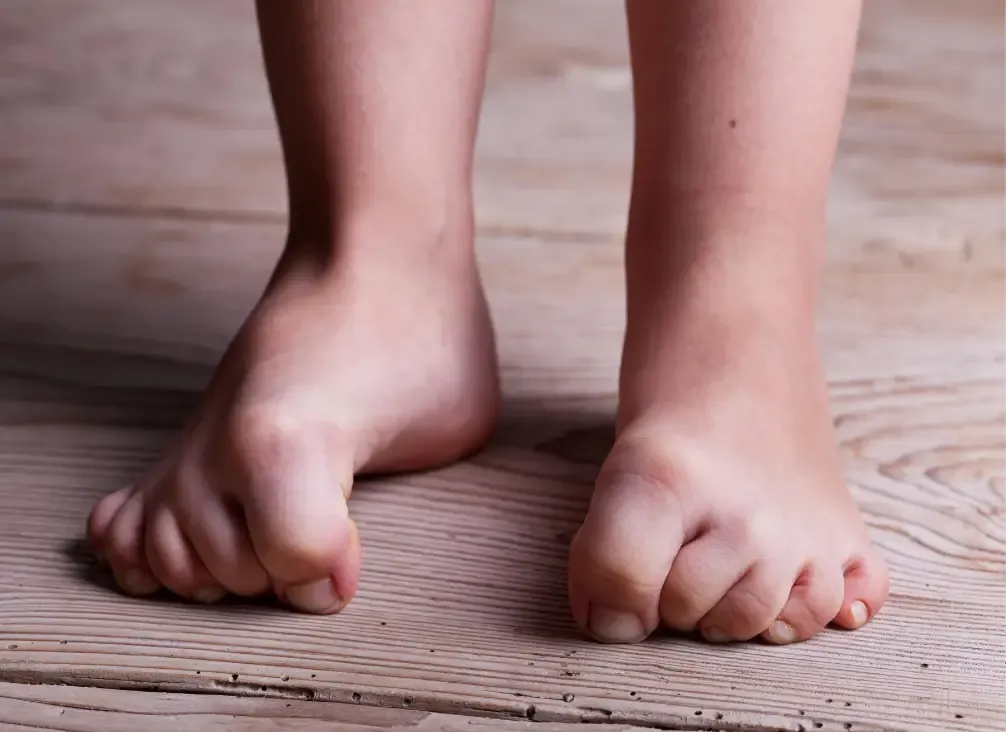
Children’s feet change constantly as they grow. A great deal of what worries parents is normal development that resolves on its own, and some of it isn’t — the difficulty is that they look similar from the outside.
An assessment tells you which one you’re looking at. If it’s the first, you get told so and sent home.
Worth having checked
- A noticeable change in how your child walks or runs
- Foot, ankle or leg pain, particularly during or after activity
- Frequent tripping or clumsiness
- Not wanting to join in with physical activity they used to enjoy
- Uneven shoe wear — worn-down edges, scuffed toes
- Knees turning inward, or another change in posture
No concern is too small here. A check that finds nothing is still useful, because it replaces worry with an answer.
What comes up most
- Flat feet (pes planus)
- Bow legs (genu varum) and knock knees (genu valgum)
- Growing pains
- In-toeing and out-toeing
- Sever’s disease — heel pain during growth
- Osgood-Schlatter disease — knee pain during growth spurts
- Sports injuries
- Plantar warts
- Ingrown toenails
What the appointment involves
Your podiatrist will take a history — what you’ve noticed, when, and what makes it worse — then examine your child’s lower limbs and watch them walk and run.
The examination covers joint range and flexibility, muscle strength, alignment through the legs, and how the foot behaves under load. Footwear gets looked at too, including the wear pattern, so bring the shoes they actually wear.
Where something is found, the first interventions are the simple ones: footwear changes, activity modification, and strengthening or stretching work you do at home. Devices come after those, not instead of them.
About orthotics for children
Prescribing is conservative and deliberate. Under three or four, orthotics are rarely appropriate unless symptoms are severe or there’s an underlying medical condition — a young child’s gait is still developing and a device can interfere with that.
Where one is prescribed, it’s usually a lightweight or prefabricated device suited to the child’s activity and stage of growth, and it’s reviewed every three to six months because a growing foot outgrows it. See orthotics for the options and the fees.
Frequently asked questions
My child has flat feet. Is that a problem?
Usually not. Almost all young children have flat-looking feet, and an arch typically develops somewhere between about four and eight. Flat feet that don't hurt, don't limit anything and don't look asymmetrical are generally left alone. Flat feet with pain, fatigue or a marked difference between sides are worth assessing.
Does my child need orthotics?
Probably not. Footwear, activity and strengthening come first, and children under three or four are rarely prescribed a device at all unless symptoms are severe or there's an underlying condition. Prescribing too early can interfere with how gait develops naturally.
Are growing pains real?
Genuine growing pains exist and are typically deep aching in both legs, in the evening or overnight, with nothing to find on examination in the morning. Pain in one leg, pain during activity, pain at a specific spot, limping or swelling are not growing pains and should be looked at.
How much does a children's appointment cost?
The same as an adult one — $125 for an initial consultation (item 004), $98 for a standard consultation (item 014). If your child is eligible for a Medicare care plan through your GP, part of the fee may be rebated. Full list on the fees page.
What if the appointment finds nothing wrong?
Then you'll be told that, and it's a good outcome rather than a wasted visit. A lot of what parents bring in is normal development, and knowing that is the point.
Ready to book?
Appointments Monday to Saturday, with confirmation by SMS.