
Conditions
Shin Splints
Reviewed by Anureet Selach, Podiatrist · Australian Podiatry Association · Registered with AHPRA
Last updated
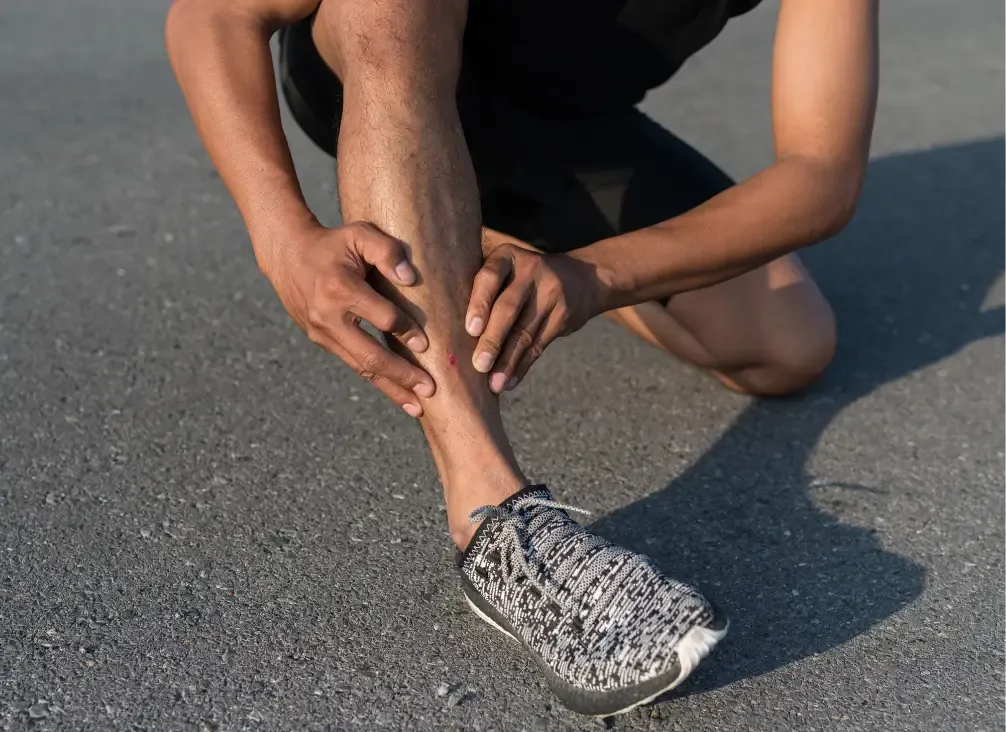
Pain along the inner edge of the shin that comes on with running or walking. Sore to touch afterwards. Possibly you’ve been told to run through it, and it’s got worse.
“Shin splints” isn’t a diagnosis. It’s a loose description of exertion-related lower leg pain, and it covers at least three different conditions with different treatments and very different consequences if you get it wrong.
Working out which one you have is the first job.
The three possibilities
1. Medial tibial stress syndrome — the most common
The membrane lining the shin bone, the periosteum, becomes inflamed under repetitive stress. Pain is felt along the inner border of the lower leg, spread over several centimetres rather than at one point, and it typically worsens as activity continues.
Common contributors:
- Flat feet or excessive pronation
- Running technique
- Worn-out or inadequate footwear
- Training on hard surfaces
- A jump in training volume
Chronic cases can produce bone changes visible on X-ray, and in severe cases the muscle can begin tearing away from the bone.
2. Tibial stress fracture
This feels similar and behaves differently. A stress fracture:
- Hurts at a small, specific point you can put a finger on
- Is often painful at rest, and at night
- Gets worse with stairs or squatting
- Doesn’t improve with rest in the way MTSS does
It’s frequently missed on early X-rays because the change is subtle, so persistent symptoms with a normal X-ray warrant further imaging rather than reassurance.
This is the one where continuing to train carries real risk.
3. Chronic exertional compartment syndrome
Pressure builds within a muscle compartment during exercise, producing tightness, aching, and sometimes numbness or weakness that comes on at a predictable point into a run and settles within minutes of stopping.
That predictability — same distance, same time, every time — is the distinguishing feature.
How it’s assessed
Your podiatrist will take a detailed history, because the pattern of the pain does most of the diagnostic work: where exactly it hurts, when it started, what changed in your training, whether rest helps, and whether it hurts at night.
Then examination — palpation along the tibia to locate the pain precisely, assessment of calf and foot mechanics, ankle range, and gait analysis.
Imaging is arranged where a stress fracture is suspected or where symptoms aren’t following the expected course.
Treatment
It follows the diagnosis, which is the point of the page.
For medial tibial stress syndrome, the usual approach is load management, progressive calf and foot strengthening, footwear and surface changes, gait work where technique is contributing, and orthotics where mechanics are a driver. Shockwave therapy is an option for chronic cases that haven’t responded.
A stress fracture needs a period of genuine offloading and a graded return — sometimes with a CAM boot — and that timeline isn’t negotiable.
Compartment syndrome is managed differently again and may need a referral for a surgical opinion.
Frequently asked questions
Can I run through it?
Not until you know what it is. Medial tibial stress syndrome often tolerates reduced load. A tibial stress fracture doesn't — running through that risks turning a stress reaction into a complete fracture. That's exactly why the diagnosis comes before the training advice.
How do I tell a stress fracture from shin splints?
Tenderness over a small, specific point rather than spread along the inner border, pain that's there at rest and at night, and pain that doesn't improve with rest, all point towards a stress fracture. It's a clinical judgement, and early X-rays frequently miss them — so if suspicion is high your podiatrist will refer you for further imaging.
How long until I can train again?
Medial tibial stress syndrome usually improves over several weeks with load management and strengthening. A stress fracture needs longer and a more controlled return. Chronic exertional compartment syndrome is different again. The timeframe follows the diagnosis.
Are new shoes the answer?
Sometimes part of it. Worn-out shoes and a sudden surface change are common triggers. But the most frequent cause is a jump in training load that the tissue wasn't ready for, and no shoe fixes that.
Do I need a scan?
Not always. Many cases are diagnosed clinically. Imaging is used where a stress fracture is suspected, where symptoms aren't improving as expected, or where the picture doesn't fit.
Ready to book?
Appointments Monday to Saturday, with confirmation by SMS.