
Conditions
Foot Odour
Reviewed by Anureet Selach, Podiatrist · Australian Podiatry Association · Registered with AHPRA
Last updated
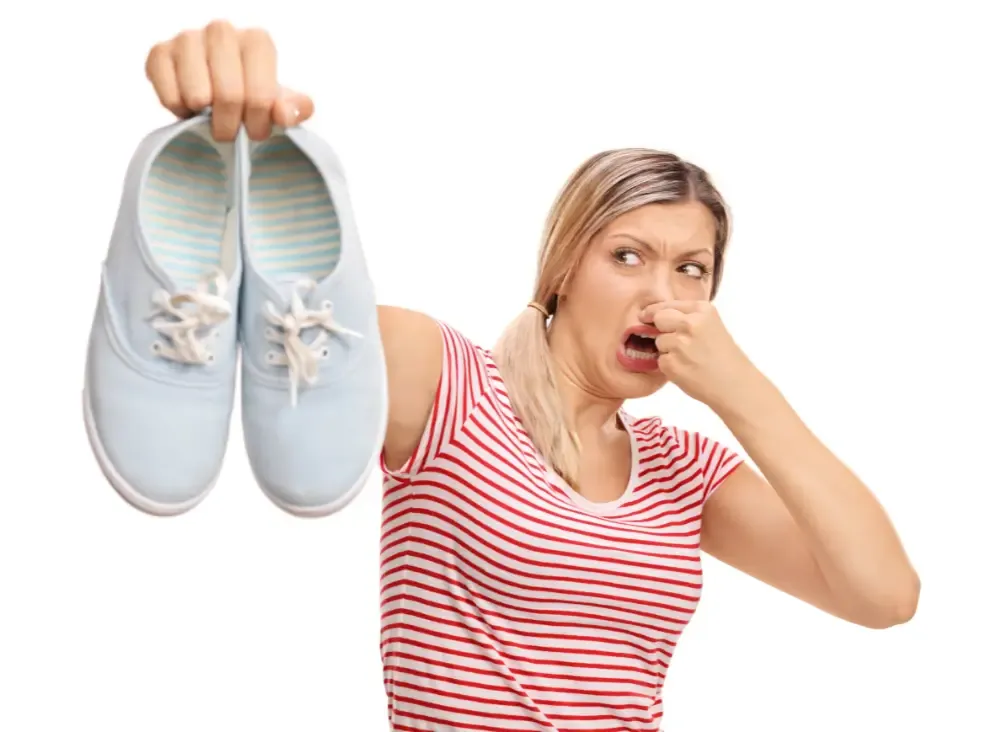
If you’re avoiding taking your shoes off in company, and the washing and the sprays and the sock changes aren’t touching it, the problem probably isn’t hygiene.
Persistent foot odour — bromodosis — usually has a cause worth identifying.
Why feet smell
Your feet have more sweat glands per square centimetre than anywhere else on your body, and can produce up to 300 ml of sweat a day. Sweat itself is essentially odourless. What produces the smell is bacteria and fungi breaking sweat and skin cells down, releasing the byproducts responsible for that characteristic cheesy odour.
So the ingredients are moisture, warmth, and time — which is exactly what the inside of a closed shoe provides.
What it can lead to
Left alone, persistent damp and microbial overgrowth can produce:
- Athlete’s foot (tinea)
- Fungal toenails
- Skin irritation and rashes
- Itchy blistering
- Secondary infection if the skin is scratched or broken
That’s the reason to treat it beyond the social discomfort.
What your podiatrist will look at
Assessment covers the skin, the nails, and your footwear habits, looking for a specific cause rather than treating the symptom:
- Tinea pedis — athlete’s foot, particularly between the toes
- Pitted keratolysis — a bacterial condition producing small pits in the sole of the foot, and a strong odour. Distinctive once you know to look for it, and it responds to specific treatment.
- Fungal nail infection
- Hyperhidrosis — genuinely excessive sweating, which is a condition in its own right
- Footwear and sock material, and how long each pair has to dry
Treatment is then aimed at whichever of those is present: topical antifungal or antibacterial treatment, debridement of affected skin, antiperspirant preparations for the feet where sweating is the driver, and footwear changes.
What to change at home
- Alternate your shoes so each pair gets a full day to dry. This is usually the highest-value single change.
- Wear moisture-wicking or wool socks, and change them during the day if your feet sweat heavily.
- Dry between your toes properly after washing. Not just the foot — between the toes.
- Wear thongs in communal showers, which is where tinea is picked up.
- Let shoes air rather than storing them in a sealed cupboard.
If you’ve done all of that consistently for a few weeks and nothing has changed, that’s the point to have it looked at.
Frequently asked questions
I wash my feet every day. Why do they still smell?
Because washing isn't the variable. The odour comes from bacteria breaking down sweat that's trapped against the skin, so the things that change it are how much you sweat, how quickly your footwear dries, and whether there's a fungal or bacterial skin infection involved. Hygiene is rarely the actual problem.
Is it a fungal infection?
Sometimes, and it's worth checking. Athlete's foot between the toes and pitted keratolysis — a bacterial condition producing small pits in the sole — both cause persistent odour and both need treating specifically. Deodorant won't touch either.
Do my shoes need replacing?
Not necessarily, but they need to dry. A shoe worn two days running never fully dries out, which keeps the bacteria going. Alternating pairs so each gets 24 hours to dry is often the single most effective change.
What about excessive sweating?
Hyperhidrosis — genuinely excessive sweating — is a recognised condition with specific treatments, including topical antiperspirants for the feet and other options where those aren't enough. If your feet are soaking through socks daily, that's worth raising rather than managing around.
Is this worth an appointment?
If it's persistent despite the obvious changes, yes. It usually turns out to have an identifiable cause, and the treatable ones — tinea, pitted keratolysis, hyperhidrosis — don't respond to anything you can buy in a supermarket.
Ready to book?
Appointments Monday to Saturday, with confirmation by SMS.