
Conditions
Chilblains
Reviewed by Anureet Selach, Podiatrist · Australian Podiatry Association · Registered with AHPRA
Last updated
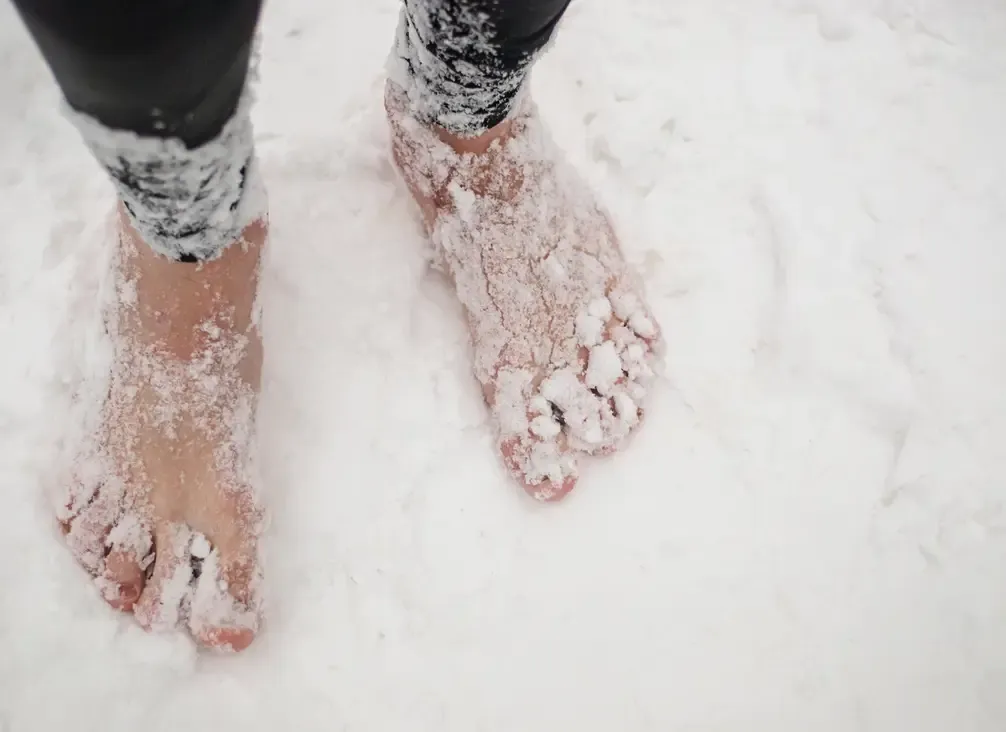
Small red or purple patches on the toes, usually appearing a day or so after your feet have been cold. Intensely itchy indoors, burning or sore rather than itchy once they are established. Sometimes swollen, occasionally blistering.
They turn up reliably through a Melbourne winter, and almost always in houses that are cold rather than in genuinely freezing conditions.
What is actually happening
Chilblains are an abnormal reaction of the small blood vessels near the skin surface to cold, followed by rewarming.
When the foot gets cold, those vessels constrict. When it warms up again, they dilate — and in people prone to chilblains that dilation happens faster than the surrounding tissue can accommodate, so fluid leaks into the skin and an inflammatory reaction follows. The lesion appears some hours later.
Which makes the trigger the rewarming rather than the cold itself. This is the single most useful thing to understand about them, because the instinctive response to cold feet — the heater, the hot water bottle, the hot shower — is precisely the thing that sets them off.
What makes some people prone to them
- Naturally poor peripheral circulation, and being cold-handed and cold-footed generally
- Being lean, with less insulating tissue
- Smoking, which constricts peripheral vessels
- Damp as much as cold, which is why wet socks matter
- Raynaud’s phenomenon and some connective tissue disorders
- Certain medications that affect circulation
- A family history, which is common
What helps
Prevention through the season does more than treating each one.
- Keep feet consistently warm rather than cycling between cold and hot. Wool or thermal socks, indoors as well as out, and warm slippers on cold floors.
- Warm cold feet gradually, at room temperature. Not a heater, not a hot water bottle, not a hot shower.
- Keep them dry. Change out of damp socks promptly.
- Do not sit with feet against a heater. It is the most common trigger there is.
- Keep moving through the day to maintain circulation.
- If you smoke, this is one of the many things it makes worse.
For an established chilblain: protect it, resist scratching, and let it settle. Your podiatrist can dress a broken one, offload a lesion that is being rubbed by footwear, and advise on padding where a toe deformity means a chilblain keeps forming at the same pressure point.
When to have them looked at
⚠ If you have diabetes or known circulation problems, do not manage these at home. A broken chilblain is an open wound on a foot with a reduced ability to heal it, and the sensation loss that often accompanies diabetes means you may not feel it worsening. Book a diabetic foot assessment.
Worth an appointment for anyone:
- A chilblain that has broken down or ulcerated
- Signs of infection — spreading redness, warmth, discharge, increasing pain
- Lesions on one foot only, which raises the question of a local circulatory cause
- Chilblain-like lesions appearing outside cold weather, which warrants medical investigation rather than podiatric management alone
- Recurrent severe seasons despite doing all of the above
Frequently asked questions
Why do I get them and nobody else in the house does?
Chilblains are an abnormal reaction of the small blood vessels in the skin to cold, and how strongly those vessels react varies enormously between people. Being naturally cold-handed and cold-footed, being lean, smoking, and some circulatory and connective tissue conditions all make it more likely. It is a reaction, not an exposure, which is why two people in the same cold house get different results.
Isn't the answer just to warm my feet up?
Warming them is right; warming them fast is what triggers the reaction. A heater, a hot water bottle or a hot shower on cold feet causes the vessels to dilate faster than they can cope with, and that mismatch is what produces the lesion. Warm gradually, at room temperature, with socks rather than heat applied directly.
How long do they take to go?
An individual chilblain usually settles over one to three weeks. The difficulty is that through a cold season new ones keep appearing, so it feels continuous. Prevention through the winter matters more than treating each one.
Can they get infected?
Yes, if the skin breaks. The itch is intense and scratching or a blister that opens gives bacteria a way in. Anything that is weeping, increasingly painful, or surrounded by spreading redness needs to be looked at rather than waited out.
Do I need to see anyone about them?
Most straightforward chilblains are managed with warmth, protection and patience. Worth having assessed: ones that ulcerate, ones that keep recurring outside cold weather, ones that appear on only one foot, and any occurring alongside diabetes or known circulation problems.
Ready to book?
Appointments Monday to Saturday, with confirmation by SMS.