
Patient advice
Wearing a CAM Boot: What You Need to Know
Reviewed by Anureet Selach, Podiatrist · Australian Podiatry Association · Registered with AHPRA
Last updated
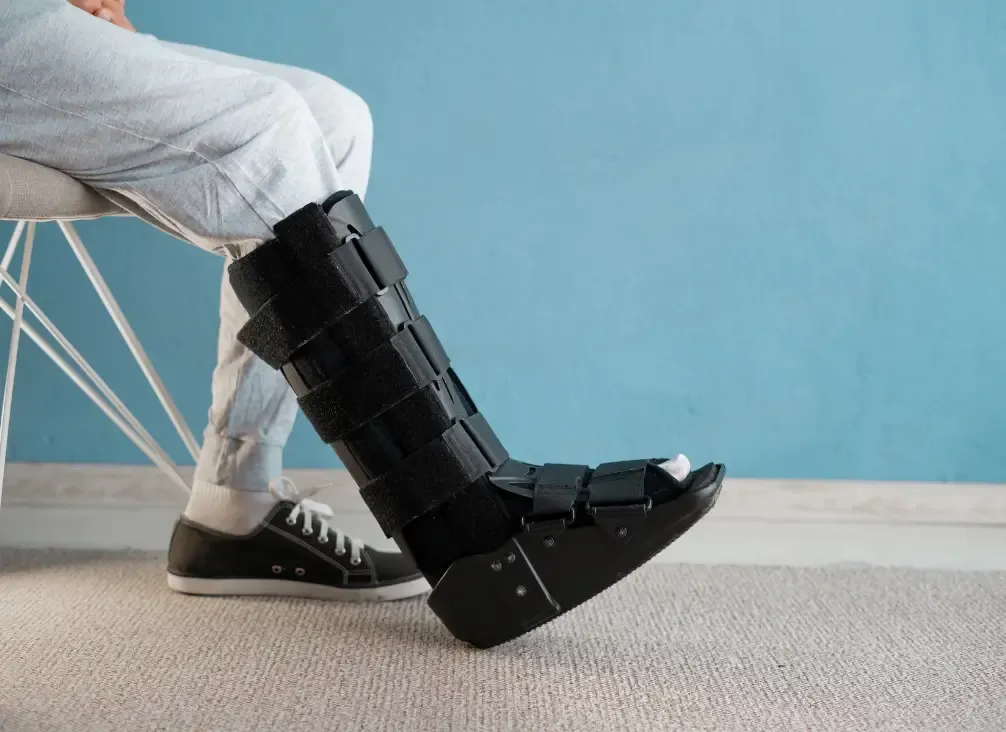
If you’ve been given a CAM boot — a moon boot, a walker boot, a CAM walker, all the same thing — you’re recovering from an injury to the foot, ankle or lower leg, or you’ve had surgery on one. The boot’s job is to hold the injured part still while it heals, and to let you keep walking while that happens.
It does that well. It also introduces a few risks that a shoe doesn’t, and almost all of them are avoidable if you know about them on day one. This page is what your podiatrist would tell you at a fitting.
General guidance, not a treatment plan. Injuries differ, and so do the instructions that go with them. Anything your treating podiatrist or surgeon tells you about your own boot overrides what’s written here.
Four things to watch for
1. Calf symptoms — the one that needs same-day attention
A CAM boot holds your ankle still. That’s the point, but it also switches off the calf-muscle pump, which is what normally helps push blood back up your leg when you walk. Slower circulation means blood can pool, and pooled blood can clot. The risk is higher if you’ve had a clot before, if you’re on the contraceptive pill or hormone therapy, if you’re pregnant, or if you’re not moving much.
Get medical attention the same day if you notice:
- New or worsening pain in the calf
- Throbbing, cramping or tightness through the leg
- Redness, swelling, or skin that feels warmer than the other leg
- Pain that arrives suddenly after things had been improving
None of these are reasons to panic, and most turn out to be something else. But a clot is the one complication of a walking boot that is genuinely serious, and it’s the one that gets missed because the leg was already sore.
2. Don’t drive in it
Not on your clutch or brake foot. The boot slows how quickly you can move your ankle, which directly lengthens the time it takes you to brake. Some insurers will decline a claim if you were driving in a boot when it wasn’t safe to.
Take it off before you drive and refit it once you’ve parked. If that’s not practical for your day, say so at your fitting — there are other options.
3. Take the stairs slowly
Your balance is different in a boot, and the sole is thicker than you expect. Use the handrail every time. The old rehab phrase is worth remembering: up with the good, down with the bad — lead with the uninjured leg going up, and with the booted leg going down.
For the first few days, have someone with you on stairs if you can.
4. Keep it dry
Moisture under the liner causes skin irritation, and on broken skin or a surgical wound it invites infection. That matters more if you have diabetes or any loss of sensation in the foot, because you may not feel a problem starting.
Cover the boot in the rain, and don’t shower in it — the liner takes a long time to dry out properly.
Fitting the boot correctly
Most of the trouble people have with CAM boots comes from fit, not from the injury. Here’s the order that works.
1. Get it ready. Take the soft liner out of the hard outer shell. Have a clean, seamless sock ready — moisture-wicking or cotton. A sock with a toe seam is a common cause of a pressure sore in a boot.
2. Foot into the liner first. Slide your foot in and push your heel right to the very back. Smooth out every crease in the sock and the liner before you go any further; a fold that feels like nothing now is a blister by the afternoon.
3. Liner into the shell. Lower the foot and liner in together, carefully. The side supports — the rigid stays — should run vertically up the centre of your lower leg, not angled in or out.
4. Check where your toes sit. Your big toe should be about a thumb’s width back from the front edge. If your toes overhang the end, the boot is too small and your injury isn’t protected. If they’re a long way back, it’s too big and you’ll trip on it.
5. Set the height. On a tall boot, the top edge should sit below the crease behind your knee. Any higher and it digs in every time you sit down. Remove the white protective strips if they’re still in place — some models ship with them.
6. Pad it if you need to. Use the padding that came with the boot, over or under the straps, at the heel, or under the toes. Aim for secure without pressure.
7. Straps in the right order. Ankle first, then the foot, then work up the leg. Firm, not tight. Too tight restricts circulation; too loose lets your foot slide, which defeats the whole purpose.
8. Inflate the bladder, if it has one. Pump until the liner feels snugly supportive and stop. Overinflating turns support into constriction.
Walking in it
Heel first. Land on your heel and let the curved rocker sole roll you forward. It feels strange for the first day or two and then stops feeling like anything.
Don’t limp. A limp in a CAM boot isn’t a habit, it’s a height problem — the boot is taller than your shoe, so one leg is effectively longer. A shoe balancer on the uninjured foot evens them up and takes the strain off your hip and lower back. If you’re walking any real distance, this isn’t optional.
Use crutches if you’ve been told to. And take it slowly. Doing too much too early is the most common reason a recovery stretches out, and compensation injuries in the other leg are their own problem.
Skin and hygiene
- Clean sock, every time
- No creases, no folds
- Use the padding if you feel pressure building at the heel or toes
- If you’re in the boot long-term, take the liner out and air it regularly
Check the skin on your foot daily — heel, toes, and the bony points on either side of the ankle. If you have diabetes or any numbness in the foot, ask someone to check it for you, or use a mirror.
Accessories that make a difference
- Shoe balancer — evens out the leg-length difference. The one accessory almost everyone in a tall boot needs.
- Achilles wedges — used where the injury needs the heel held slightly raised. Your podiatrist will say whether yours does.
- Crutches — for the early stage of a non-weight-bearing or partial weight-bearing injury.
- Seamless boot socks — cut down the friction that causes blisters under a liner.
Why fitting is a clinical job
A CAM boot looks like a simple piece of equipment. Getting it right is not simple, and the consequences of getting it wrong are pressure injuries, delayed healing and pain somewhere you weren’t injured.
At a fitting appointment, your podiatrist will assess the injury and choose the right boot and height for it, fit and adjust it, add padding where you need it, and give you instructions for your specific injury. They’ll also plan how you come out of it — weaning off a boot too fast is its own way of going backwards.
Reception staff can’t fit a boot. They’re not able to assess an injury, and they shouldn’t be asked to. If you’ve bought a boot elsewhere and you’re not sure it’s right, book a fitting and bring it in.
Have your boot fitted in Brunswick West
A podiatrist at the clinic fits CAM boots, wherever yours came from. The fitting is $78, not including the boot, and covers sizing, strapping and padding, with instructions for your injury. CAM boot fitting at the clinic and fees and health fund codes.
Frequently asked questions
Can you get a blood clot from wearing a walking boot?
It's possible, and it's the main risk to know about. A CAM boot holds your ankle still, which switches off the calf-muscle pump that normally helps push blood back up your leg. That slows circulation and can let blood pool. New or worsening calf pain, throbbing, cramping, tightness, redness, swelling or unusual warmth all need same-day medical attention — don't wait for your next appointment.
Can I drive in a CAM boot?
Not on your clutch or brake foot. The boot slows how fast you can move your ankle, which lengthens your braking time, and some insurers will decline a claim if you were driving in one. Take the boot off before you drive and put it back on once you've parked.
Can I sleep in my CAM boot?
That depends on your injury, and it's a question for the podiatrist or surgeon managing it. Some fractures and post-operative repairs need the boot on overnight; others don't. Ask at your fitting so you're not guessing.
Why does my hip or back ache since I started wearing the boot?
Because the boot is taller than your other shoe, so you're walking with one leg effectively longer than the other. A shoe balancer on the uninjured foot evens the two out. It's the single most common cause of new hip, knee and lower-back pain in someone who was fine before the boot.
How long will I be in it?
Six to eight weeks is typical for a stable fracture, but it's set by what's healing and by how it's healing, not by a calendar. Your podiatrist will reassess and take you out of it gradually rather than all at once.
Can I buy a CAM boot without being fitted?
You can buy one, but a boot that's the wrong size or wrongly strapped can cause pressure sores and slow the injury down. A fitting consultation is about 20 minutes and includes sizing, strapping, a shoe balancer if you need one, and instructions for your specific injury.
Ready to book?
Appointments Monday to Saturday, with confirmation by SMS.