
Services
Fungal Nail Treatment in Brunswick
Reviewed by Anureet Selach, Podiatrist · Australian Podiatry Association · Registered with AHPRA
Last updated
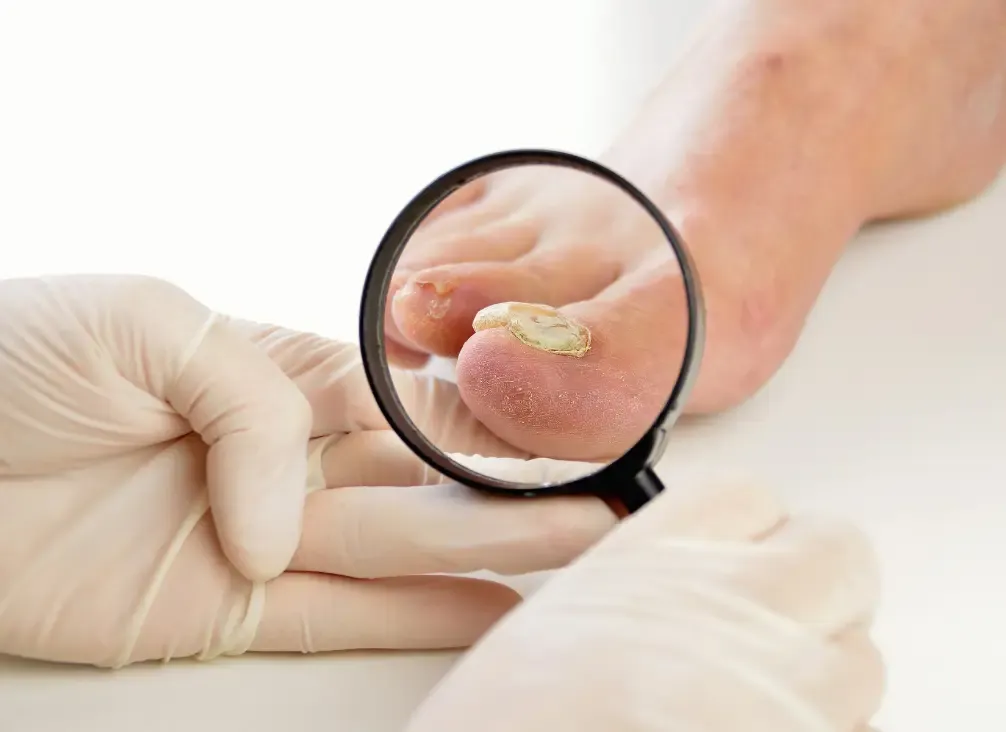
Thick, yellow, brittle or crumbling toenails are usually onychomycosis — a fungal infection where dermatophytes get into the nail plate or the nail bed underneath. It starts small, with a patch of discolouration or a change in texture, and it doesn’t resolve on its own.
It’s extremely common, it’s stubborn, and it’s treatable with the right approach and realistic expectations about time.
What it looks like
- Yellow, brown or white discolouration
- Thickened or crumbly nail
- A nail that’s changed shape
- Flaky debris underneath
- The nail lifting away from the nail bed
- Mild odour, or itchiness around the nail
It can affect one nail or several, and it often travels with athlete’s foot between the toes.
Where it comes from
Fungus wants warm and damp, which describes the inside of a shoe:
- Barefoot in communal showers, pool decks and changing rooms
- Enclosed shoes that trap moisture
- Feet that sweat heavily
- Damage to the nail
- A weakened immune system
- Diabetes or a circulatory condition
Why the pharmacy aisle usually fails
People spend months on topical antifungals with no change, and conclude the infection is untreatable. Usually the treatment simply never reached it — a topical solution has to penetrate the nail plate to get to the nail bed, and a thickened, damaged nail stops it.
That’s the specific thing podiatry adds.
What treatment involves
Your podiatrist will assess the nail, check circulation and sensation, and where the diagnosis is uncertain may take a sample for testing before starting a long course of anything.
A management plan typically includes:
- Debridement — thinning and reducing the infected nail with sterile instruments. This improves the appearance immediately, and more importantly it lets topical treatment actually reach the infection.
- Medical-grade topical antifungals, chosen for their ability to penetrate to the nail bed, applied in clinic and continued at home.
- Prevention — footwear, sock material, drying routine, and treating any athlete’s foot at the same time, because reinfection from the skin is how this comes back.
Where an infection is widespread or hasn’t responded, oral antifungal medication is more effective. That’s prescription-only, and your podiatrist will refer you for it rather than leaving you to chase it.
About the timeline
Nothing makes an infected nail look healthy. What treatment does is clear the infection and let healthy nail grow out from the base, and a toenail takes roughly nine to twelve months to fully replace itself.
Progress is judged at the base of the nail, not at the tip. Your podiatrist will show you what to look for.
Frequently asked questions
Why haven't pharmacy treatments worked?
Because most of them can't get through the nail plate. A topical antifungal has to reach the nail bed underneath, and a thickened or damaged nail blocks it. Thinning the nail first — debridement — is what changes that, and it's the step a pharmacy product can't do for you.
How long does it take to clear?
Longer than most people expect, because you're waiting for healthy nail to grow out rather than for the existing nail to improve. A toenail takes roughly nine to twelve months to replace itself completely. Progress is judged by the new growth at the base, not by how the old nail looks.
Is it actually fungal?
Not always, and that matters. Nail trauma, psoriasis and other conditions all produce thickened, discoloured nails that look identical. Your podiatrist will assess it, and where the diagnosis isn't clear a nail sample can be sent for testing before anyone commits to a long course of treatment.
Can it spread?
Yes — to your other nails, to the skin between your toes as athlete's foot, and to other people. Shared showers, pool decks and borrowed footwear are the common routes. Treating it early keeps it to one nail.
Will I need tablets from a doctor?
Sometimes. Oral antifungals are more effective for widespread or stubborn infections, and they're prescription-only. If your podiatrist thinks that's the right route, they'll refer you rather than leave you to work it out.
Ready to book?
Appointments Monday to Saturday, with confirmation by SMS.