
Services
Plantar Wart Treatment in Brunswick
Reviewed by Anureet Selach, Podiatrist · Australian Podiatry Association · Registered with AHPRA
Last updated
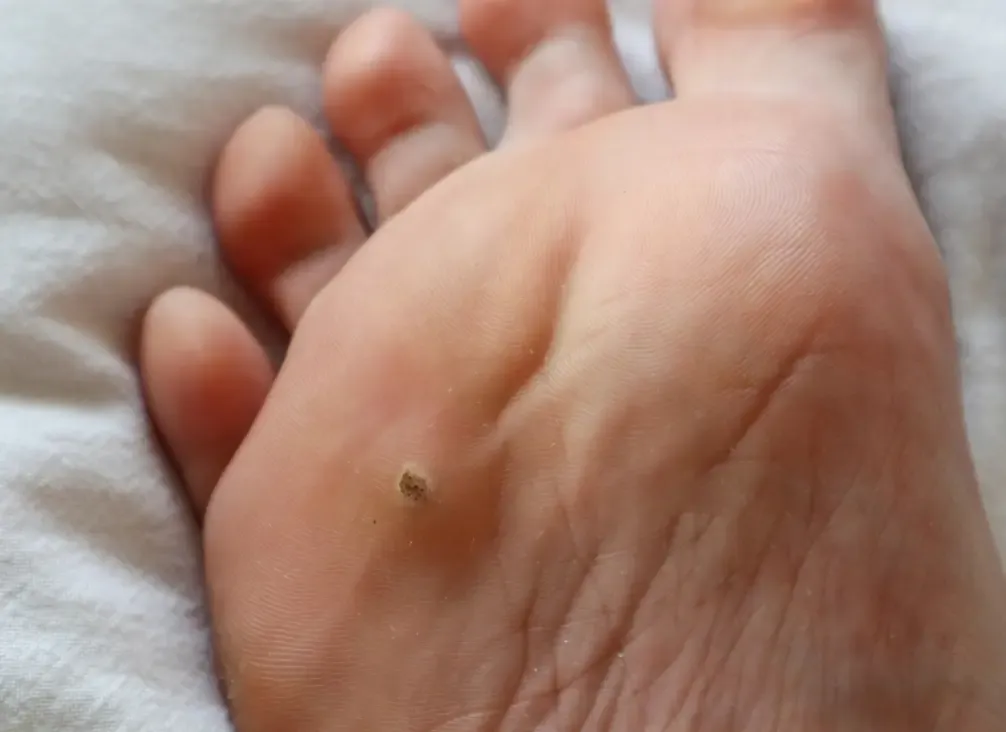
Plantar warts — verruca pedis — are caused by the human papillomavirus infecting the top layer of skin, usually getting in through a small crack or cut. On the sole of the foot they grow inward rather than outward, because you stand on them, which is what makes them painful.
They’re very common in children, teenagers and active adults, and they’re genuinely difficult to shift. Anyone who has spent three months on a pharmacy wart paint without result is having a normal experience.
What they look like
- Hard, rough or grainy lumps
- Tiny black dots within the lesion — clotted blood vessels, not dirt
- Pain on walking, particularly on the heel or the ball of the foot
- One lesion, or a cluster of them (mosaic warts)
A useful home test: a wart hurts more when you pinch it from the sides than when you press on it. A corn does the reverse.
Yes, they’re contagious
They spread to other parts of your foot, to other people, and around a household. HPV survives on surfaces for months and thrives on warm wet floors — public pools, changing rooms, communal showers.
Don’t go barefoot on shared floors, don’t share towels, socks or shoes, and get them treated before they multiply.
How your podiatrist treats them
There is no single cure for warts, and any page telling you otherwise is overselling. What’s available is several evidence-based approaches, chosen for the wart’s site, size, duration and how much it’s bothering you:
- Cryotherapy — freezing with liquid nitrogen. A blister forms around the wart and the dead tissue sheds over the following days. Usually repeated every two to four weeks.
- Salicylic acid — a strong keratolytic applied over time to take the wart down in layers. Often used alongside cryotherapy.
- Combination therapy — the two together, which tends to raise success rates by provoking more of an immune response to the virus.
- Monitoring — for a mild, painless wart, watching it is a legitimate plan. Many clear on their own within twelve to twenty-four months.
Whichever route is chosen, treatment starts with the skin being safely debrided — the hard overlying tissue pared back. That’s more comfortable immediately, and it lets topical treatment reach the wart instead of sitting on callus.
When to book
- The wart is painful, or growing
- There are several, or they’re spreading
- Pharmacy treatments haven’t worked
- You have diabetes, reduced circulation, or reduced sensation in your feet — in which case don’t self-treat a foot lesion at all
- You’re not certain it’s a wart
Frequently asked questions
How is a plantar wart different from a corn?
A wart interrupts the skin lines rather than running with them, it often has tiny dark points in it — clotted capillaries — and it hurts more when you squeeze it side to side than when you press straight down. A corn is the opposite on all three. They're treated completely differently, which is why it's worth having it identified rather than guessed.
How many treatments will it take?
Warts are stubborn and there's no way to promise a number. Cryotherapy is usually repeated every two to four weeks, and combination approaches often work faster than either treatment alone. Your podiatrist will review as you go and change approach if it isn't responding.
Are they contagious?
Yes. They spread to other parts of your own foot, to other people in the house, and via shared wet floors. Don't share towels or shoes, wear thongs in communal showers, and cover the wart if you're using a pool.
Will it go away on its own?
Many do, within about twelve to twenty-four months, particularly in children. That's a genuine option where the wart isn't painful or spreading, and your podiatrist may suggest monitoring rather than treating. It's a reasonable choice, not a brush-off.
Can my child have this treated?
Yes, and children get plantar warts more than anyone. Treatment is adjusted for age and for how much the child will tolerate — a gentler salicylic acid approach is often chosen over cryotherapy for younger children.
Ready to book?
Appointments Monday to Saturday, with confirmation by SMS.