
Services
Paraffin Wax Bath
Reviewed by Anureet Selach, Podiatrist · Australian Podiatry Association · Registered with AHPRA
Last updated
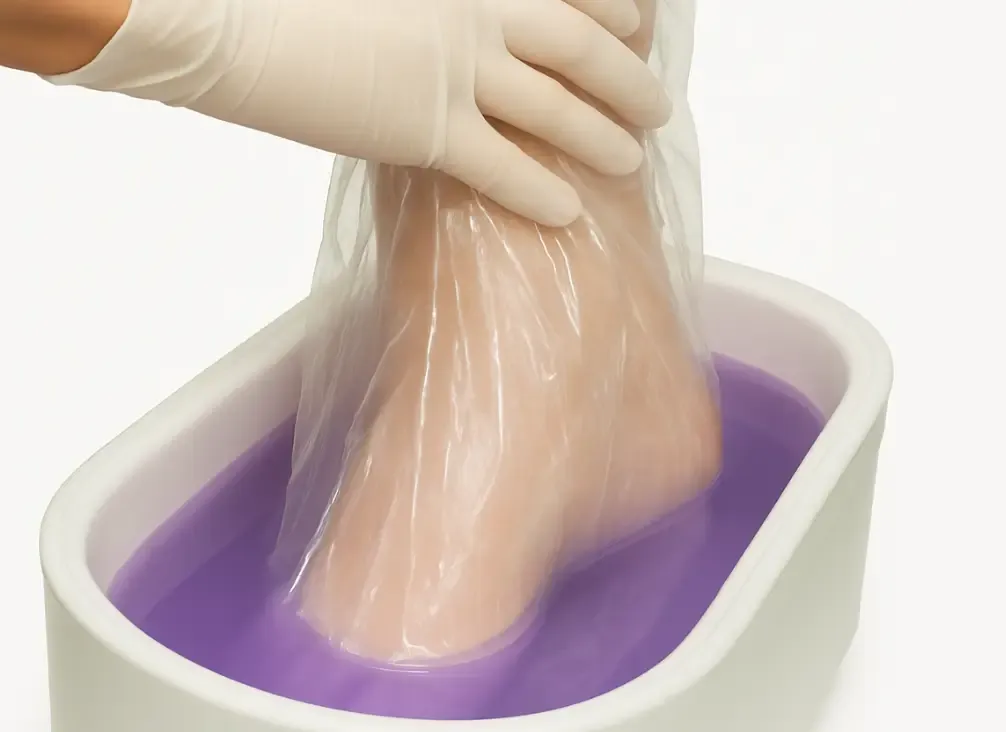
If your feet are cold indoors, in summer, in socks — and you’ve worked through the wool socks and the hot water bottles without much success — a paraffin wax bath is a straightforward treatment worth knowing about.
What it is
Your feet are immersed in warm, melted paraffin wax. The wax sets into a cocoon around the foot and releases heat into the tissue gradually across a 20-minute session. It holds warmth much better than water does, at a controlled and comfortable temperature.
A protective liner is placed between your skin and the wax, so nothing is shared between patients.
Who it helps
- Feet that are persistently cold, even indoors
- Discolouration or pain from poor circulation
- Chilblains — the painful red or purple sores that appear on toes in cold weather
- Joint stiffness and aching related to arthritis
- Raynaud’s symptoms triggered by cold
- Feet that stiffen up after long periods of sitting
What it does
- Deep, sustained warmth in feet that don’t hold heat
- Encourages circulation by dilating the small blood vessels
- Eases aching in muscles and joints
- Leaves the skin noticeably softer, because the wax is moisturising
Who it isn’t for
Paraffin wax runs at a low, controlled temperature and is gentle, but it isn’t used where there are:
- Open wounds of any kind
- Active skin conditions — an eczema or psoriasis flare, for example
- Significant sensory loss in the feet, including advanced diabetic neuropathy
That last one is the important one. Heat treatment depends on you being able to feel and report heat.
Fees
$55 per treatment, item code 121. This excludes the consultation fee — see fees and rebates for the full list. Claimable on most extras policies through HICAPS.
Frequently asked questions
How much is it and how long does it take?
$55, item code 121, and the session runs about 20 minutes. That fee excludes the consultation, so if it's your first visit there's a consultation fee as well.
Is it hygienic?
Yes. A protective liner goes between your skin and the wax, so your feet don't contact the bath itself.
Who shouldn't have it?
It isn't used where there are open wounds, an active skin condition such as an eczema or psoriasis flare, or significant loss of sensation in the feet — including advanced diabetic neuropathy. If you can't reliably feel heat, you can't tell the clinician when something is too warm, and that's the reason for the restriction.
How long does the warmth last?
Longer than a hot water bottle, because the heat goes into the tissue rather than sitting on the surface. It varies between people and it isn't permanent — this is symptom relief and comfort, used alongside whatever is being done about the underlying circulation.
Ready to book?
Appointments Monday to Saturday, with confirmation by SMS.