
Conditions
Plantar Fasciitis
Reviewed by Anureet Selach, Podiatrist · Australian Podiatry Association · Registered with AHPRA
Last updated
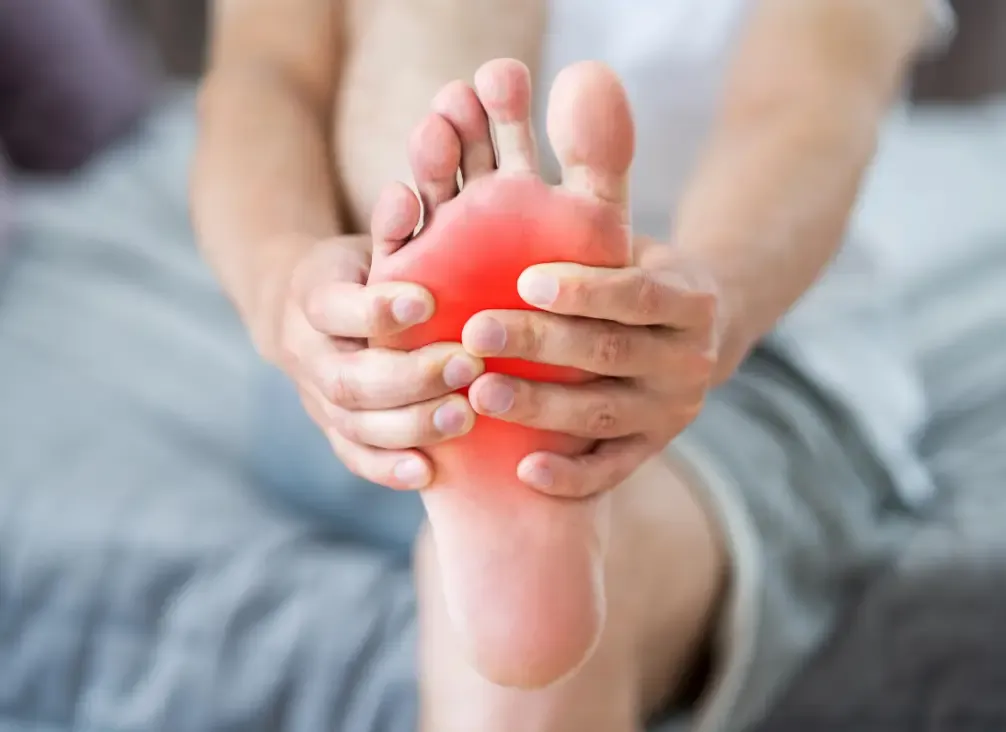
Sharp heel pain on your first steps out of bed. An ache that builds through a long day standing. Tightness through the arch that eases once you’re moving and comes back the moment you sit down.
That pattern is plantar fasciitis, and it’s the most common cause of heel pain in adults.
What’s actually happening
The plantar fascia is the thick band of tissue running from your heel bone to the base of your toes. It supports the arch and it takes load with every step. When it’s irritated — or, over a longer period, when it degenerates — you get:
- Sharp or stabbing heel pain, worst on the first steps in the morning
- Aching or burning after standing or walking for a while
- Tightness through the arch or sole
- Pain that eases with movement and returns after rest
It’s usually linked to foot mechanics, repetitive load, or a change in activity that the tissue wasn’t ready for.
Left alone it tends to change how you walk, and that compensation is what starts loading the knee, hip and lower back differently.
What contributes to it
- Foot mechanics — particularly excessive pronation, or a very high arch
- A sudden increase in walking, running or standing
- Long hours on hard surfaces
- Unsupportive or worn-out footwear
- Tight calf muscles, which increase the pull on the fascia
- Weight change
- Reduced ankle range of motion
Most cases involve several of these at once, which is why identifying which ones apply to you changes what the treatment looks like.
How podiatry approaches it
The pain is in the heel; the cause usually isn’t only there. Your podiatrist will assess your foot and your gait to find what’s loading the fascia, then build a plan around it.
That may include:
- Assessment of foot mechanics and gait to identify the drivers
- Hands-on treatment to reduce tension through the fascia, the calf and the intrinsic foot muscles
- Shockwave therapy where the problem is chronic and hasn’t responded to conservative treatment — this is where it’s most useful
- Stretching and strengthening, particularly calf and foot loading work, which is the part that changes tissue capacity rather than symptoms
- Load management and footwear advice — often the highest-value change and the one people skip
- Orthotics where mechanics are a genuine driver
The aim is to settle the irritation and change what caused it, rather than managing the pain indefinitely with cushioning and anti-inflammatories.
When to come in
Sooner is easier. Heel pain that’s been present for a few weeks generally responds faster than heel pain that’s been present for a year, because the tissue changes as it goes on.
If you’ve been managing it yourself with a gel heel cup and it isn’t shifting, that’s a reasonable point to have it assessed properly.
Frequently asked questions
Why does it hurt most first thing in the morning?
Because the fascia shortens and the tissue settles while you're asleep, and your first few steps load it suddenly from cold. Pain that's sharpest on the first steps of the day or after sitting, then eases as you move, is the most recognisable pattern in podiatry.
How long does it take to settle?
Weeks to months, and it depends heavily on how long it's been going on. Something caught early often responds inside six weeks. Something that's been building for a year takes longer, because you're dealing with degenerative change rather than irritation. Your podiatrist will give you a realistic timeframe after the assessment.
Should I rest completely?
Usually not. Total rest lets the tissue deload and the pain settle, and then it comes straight back when you return to normal, because nothing changed. Managing load — reducing it, then building it back deliberately — works better than stopping.
Do I need orthotics?
Sometimes. Orthotics are one tool among several and they're most useful where the assessment shows foot mechanics are a genuine driver. Footwear changes, calf and foot strengthening and load management do a lot of the work, and for many people they're enough.
What about a heel spur?
A heel spur on an X-ray is usually incidental. Plenty of people have one and no pain at all, and plenty have this pain and no spur. The spur is generally a result of long-term traction on the heel bone, not the cause of the symptoms, and treatment is aimed at the fascia rather than at the spur.
Ready to book?
Appointments Monday to Saturday, with confirmation by SMS.