
Services
Shockwave Therapy
Reviewed by Anureet Selach, Podiatrist · Australian Podiatry Association · Registered with AHPRA
Last updated
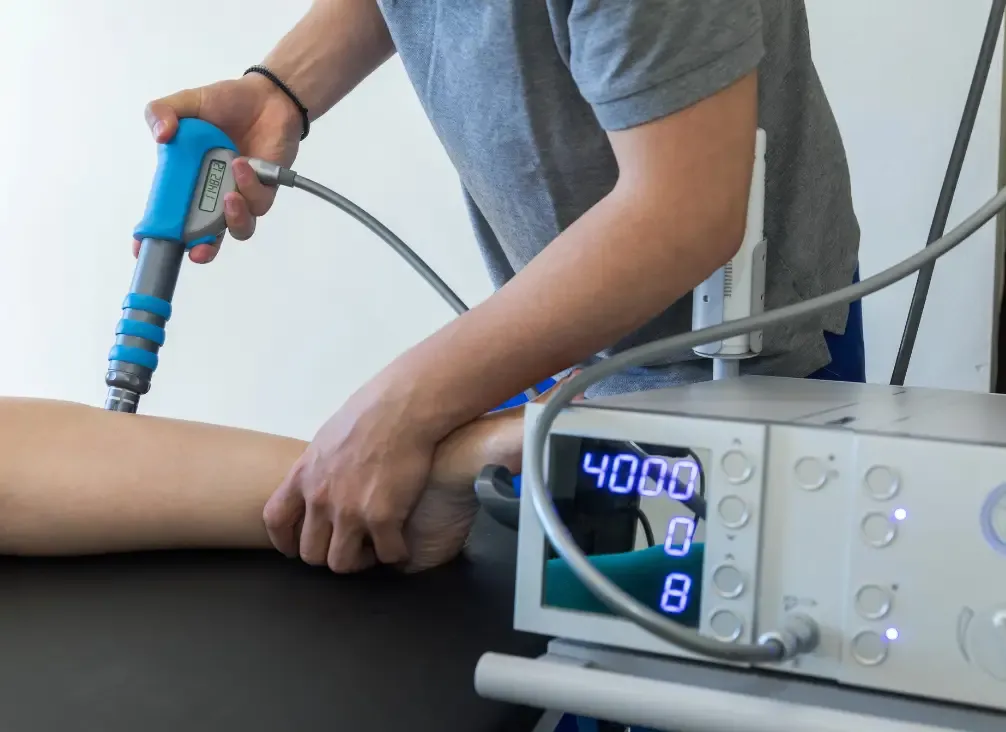
Shockwave therapy — extracorporeal shockwave therapy, or ESWT — uses high-energy acoustic waves delivered through the skin to stimulate a healing response in soft tissue. It’s used for stubborn musculoskeletal problems, particularly ones that haven’t shifted with rest, stretching, footwear changes or orthotics.
That last part matters. Shockwave isn’t usually where treatment starts. It’s what your podiatrist may suggest when the conservative things have been tried properly and the problem is still there.
What it’s used for
- Plantar fasciitis and chronic heel pain
- Achilles tendinopathy and tendon tears
- Shin splints
- Heel spurs
- Long-standing soft tissue injuries
How it works
Think of dropping a stone into still water. The ripples spread outward, well past where the stone landed. Acoustic waves move through tissue the same way, reaching the injury site and the tissue around it.
That repeated mechanical stimulus does three things. It encourages the breakdown and remodelling of disorganised scar tissue that’s restricting movement. It helps muscle and tendon fibres realign. And it reduces pain sensitivity by acting on nerve fibres and lowering Substance P, one of the chemicals involved in signalling pain.
The distinction worth understanding: this isn’t pain relief that masks a problem. It’s a stimulus intended to restart a repair process that has stalled.
What a session involves
- 10 to 20 minutes
- No anaesthetic
- Delivered with a handheld device against the treatment area
- Non-invasive, no downtime, you leave and get on with your day
The waves reach three to five centimetres below the skin, and up to about seven on specific settings, so deeper structures are treatable regardless of build.
Sessions are spaced three to seven days apart — close enough to build on each other, far enough for tissue to respond between them.
Who it isn’t for
Shockwave therapy is not used:
- During pregnancy. There isn’t adequate safety research, and treatment is postponed until after birth as a precaution.
- For children under 18, other than for Osgood-Schlatter disease.
- Where there’s a tumour, an active infection, or a thrombosis in the area.
- Where there’s a blood-clotting disorder, or you’re taking anticoagulants.
- Where there’s been a recent cortisone injection in the same site.
Tell your podiatrist about any of these before your first session, along with anything else you’re being treated for.
Fees
$78 a session, podiatry item code 145. Claimable on most extras policies — quote the item code to your fund for your exact rebate. HICAPS claims on the spot, so you pay the gap.
The consultation that establishes whether shockwave is appropriate for your problem is a separate fee. See fees and rebates.
Frequently asked questions
Does shockwave therapy hurt?
Mild discomfort during the session is normal and most people tolerate it without difficulty. It usually eases as the course goes on. Tell your podiatrist if it's more than uncomfortable — the intensity is adjustable.
How many sessions will I need?
Most people notice a change somewhere between the fifth and seventh session. Sessions are spaced three to seven days apart. Your podiatrist will review progress as the course goes rather than booking a fixed block up front.
How much is it?
$78 a session, item code 145. That's the therapy itself — the initial consultation that works out whether it's appropriate for you is charged separately.
Who shouldn't have shockwave therapy?
It isn't suitable during pregnancy, for children under 18 (with the exception of Osgood-Schlatter disease), or for anyone with a tumour, an active infection or a thrombosis in the area. It's also not used where there are blood-clotting disorders, anticoagulant medication, or a recent cortisone injection in the same site. Tell your podiatrist about all of these before the first session.
Is there any downtime?
No. It's non-invasive, there's no anaesthetic, and you walk out and carry on with your day. Your podiatrist may ask you to avoid high-impact activity for a short window after each session.
Ready to book?
Appointments Monday to Saturday, with confirmation by SMS.