
Conditions
Metatarsalgia
Reviewed by Anureet Selach, Podiatrist · Australian Podiatry Association · Registered with AHPRA
Last updated
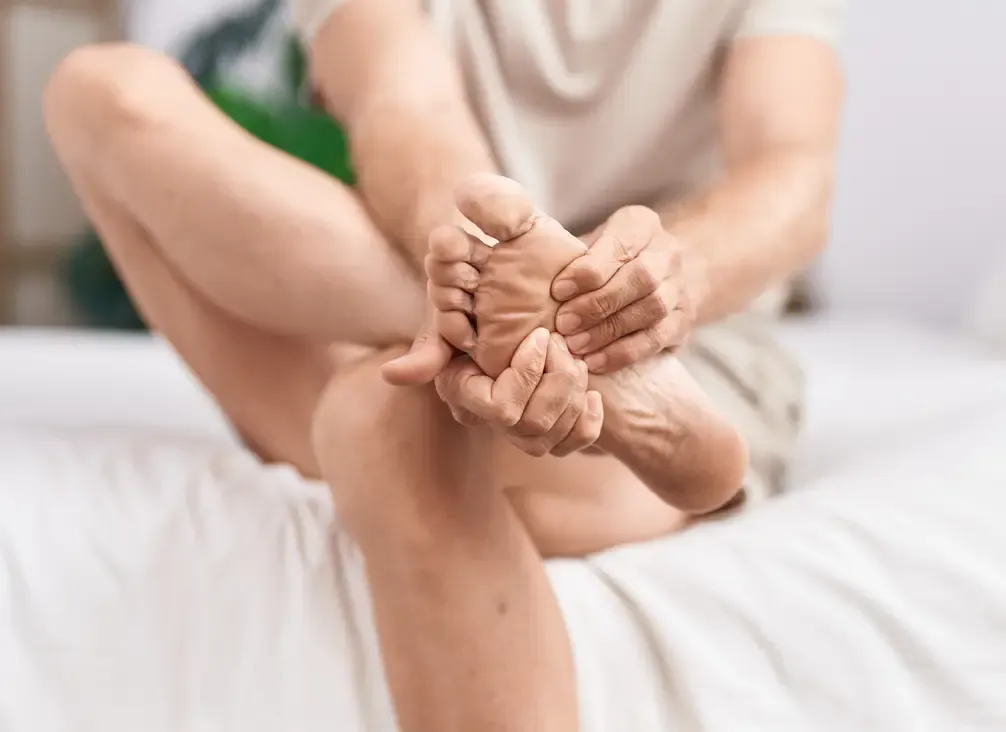
Pain under the ball of the foot. Burning or aching after you have been on your feet, a feeling of walking on a stone or on a rucked-up sock, sometimes callusing over the same spot.
“Metatarsalgia” names the region, not the diagnosis. It is a useful word for where it hurts and a useless one for what to do about it, because at least six different problems present in that exact spot and the treatment diverges sharply depending on which one you have.
What it usually turns out to be
Overload of the metatarsal heads. The commonest version, and mechanical: too much pressure through the forefoot, for too long. Often with callus built over the area, which then adds pressure of its own.
Capsulitis, most often of the second toe joint. Inflammation of the joint capsule, tender directly on the joint, sometimes with a feeling of swelling. Left long enough the supporting plate beneath the joint can begin to fail and the toe starts to drift, which is a considerably bigger problem than the pain it started as.
Morton’s neuroma. Nerve tissue thickened between the metatarsal heads, usually between the third and fourth. The distinguishing features are numbness or tingling into two adjacent toes and pain reproduced by squeezing the foot across.
A stress fracture. Gradual onset after a change in load, pinpoint bone tenderness, worse the longer you are on it, sometimes with swelling across the top of the foot.
Fat pad atrophy. The natural cushioning under the ball of the foot thins with age, so the bone sits closer to the ground. Common after sixty, and the reason a shoe that was comfortable for twenty years suddenly is not.
Bursitis, or a plantar plate tear, or referred pain from further up — all less common, all real.
How the cause is narrowed down
The history does much of it. Whether it came on suddenly or built up, whether anything changed in your walking, running, work or footwear, whether there is numbness, and whether it is worse barefoot on hard floors.
Then examination: exactly where the tenderness is, whether squeezing across the foot reproduces it, joint range and stability at each toe, callus distribution as a map of where load is going, foot posture, calf length, and gait.
Imaging is arranged where a stress fracture or a plantar plate injury is suspected. Where it is not, it usually adds nothing.
Treatment
It follows the diagnosis, which is the point of assessing rather than assuming.
Across most causes, the same levers do the work:
- Footwear. A wider, deeper toe box, a lower heel, and enough sole to take some of the impact. This is often the single biggest change available.
- Offloading. Metatarsal domes or pads placed just behind the painful heads shift load off them, either stuck to the foot or built into orthotics.
- Reducing the aggravating load for a period, then rebuilding it gradually.
- Skin work where callus has become part of the pressure — see corns and calluses.
- Strength and mobility through the calf, foot and big toe, because a stiff big toe pushes load sideways onto the joints that are hurting.
A stress fracture needs genuine offloading and a controlled return, sometimes in a CAM boot, and that timeline is not negotiable. A neuroma and a failing plantar plate each have their own pathway.
Frequently asked questions
Is metatarsalgia a diagnosis?
Not really, and that is the useful thing to know. It means pain in the ball of the foot, in the same way that headache means pain in the head. A stress fracture, a neuroma, a bursa, capsulitis, a fat pad that has thinned and simple overload all present there and are managed differently, so working out which one you have is the appointment.
Why does it feel like walking on a pebble?
That description is worth taking seriously because it points somewhere. A stone-under-the-foot sensation with numbness or tingling into two toes suggests a neuroma. Without those nerve symptoms, and with tenderness directly on the bone, it points more towards the joint or the bone itself.
Are my shoes the problem?
Frequently a large part of it. Anything that shifts weight forward and crowds the forefoot loads exactly the area that hurts, which is why heels above a few centimetres and shoes with a narrow toe box come up constantly. Thin, unsupportive soles on hard floors do the same thing more slowly.
Will orthotics help?
Where the pain is driven by how load is distributed across the forefoot, a device with a metatarsal dome or pad placed just behind the painful heads can offload it, and that is one of the more reliable uses of an orthotic. It is not the answer when the problem is a stress fracture or a nerve, which is the reason for assessing before prescribing.
When should I worry about a stress fracture?
Pain that came on gradually after a genuine increase in walking or running, that is tender over one specific point on the bone rather than spread, and that hurts more the longer you are on it. Early X-rays often look normal, so a normal film does not rule it out.
Ready to book?
Appointments Monday to Saturday, with confirmation by SMS.