
Conditions
Foot Pain During Pregnancy
Reviewed by Anureet Selach, Podiatrist · Australian Podiatry Association · Registered with AHPRA
Last updated
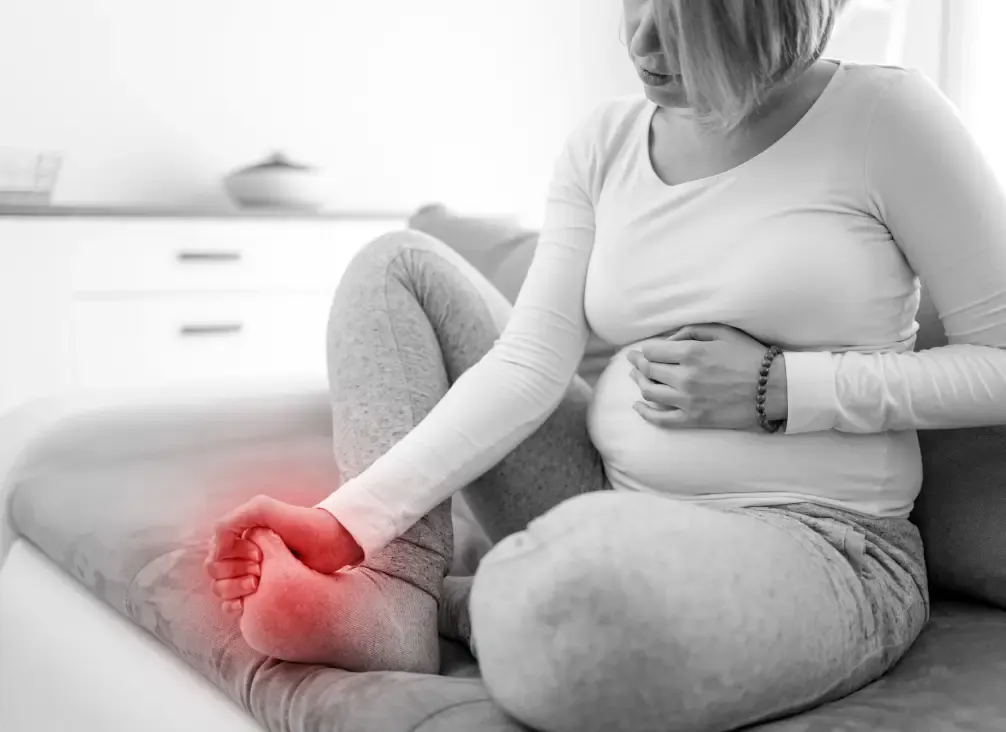
Around 70% of pregnant women report foot pain at some point, and it’s one of the things most often treated as something to put up with.
It doesn’t have to be. Most of it responds to fairly simple changes, and knowing which symptoms are normal and which aren’t is worth having straight.
Why it happens
Weight gain. Your body weight increases quickly, and every kilogram is multiplied through the feet with each step.
Relaxin. The hormone that softens ligaments to prepare for birth doesn’t act selectively — it loosens the ligaments in your feet too. Arches flatten and joints become less stable. This is the change most likely to persist afterwards.
Swelling. Increased blood volume and hormonal changes cause fluid retention, most obviously in the feet and ankles, and typically worse late in the day.
A shifted centre of gravity. As your belly grows you lean back to compensate, which changes your gait and redistributes load through the foot.
Footwear that no longer fits. Feet that are wider and more swollen in shoes chosen for a different foot.
What tends to turn up
- Flattening arches and fallen arches
- Plantar fasciitis and heel pain
- Aching, tired feet by the end of the day
- Swollen feet and ankles (oedema)
- Ingrown toenails, and difficulty reaching your own feet to manage them
- Cramping in the feet and calves
- Balance changes, and the fall risk that comes with them
What helps
Your podiatrist will assess your feet and your gait and work through what’s practical at your stage of pregnancy:
- Footwear — supportive, wide enough, adjustable, and easy to get on
- Orthotics to support arches that have flattened, often a prefabricated or semi-custom device given the timeframe
- Padding and strapping for specific painful areas
- Hands-on treatment for the foot and calf
- Practical swelling management — elevation, movement, compression where appropriate
- Nail and skin care, which becomes genuinely difficult to do yourself later on
Shockwave therapy is not used during pregnancy. Tell your podiatrist you’re pregnant, and how far along, at the start of the appointment.
Swelling that needs checking, not managing
Some foot and ankle swelling is expected. Get same-day medical assessment if you have:
- Sudden or severe swelling
- Swelling in one leg noticeably more than the other, especially with calf pain, redness or warmth
- Swelling alongside headache, visual disturbance, or pain under the ribs
Those can indicate a blood clot or pre-eclampsia. They’re not podiatry appointments — contact your maternity care provider or present for urgent assessment.
Frequently asked questions
Will my feet go back to how they were?
Partly. Swelling settles in the weeks after birth. The arch flattening caused by relaxin often doesn't fully reverse, and a lot of people find their shoe size is permanently half a size larger or their feet are wider. That's normal and it isn't a problem in itself.
Is treatment safe during pregnancy?
The podiatry care described here — assessment, footwear advice, padding, orthotics, hands-on treatment for the foot — is used routinely through pregnancy. Shockwave therapy is the exception and is not used during pregnancy. Tell your podiatrist you're pregnant and how far along at the start of the appointment.
When is swelling a concern rather than normal?
Sudden or severe swelling, swelling in one leg noticeably more than the other, swelling with calf pain, or swelling that arrives with headache, visual changes or upper abdominal pain all need same-day medical assessment rather than a podiatry appointment. Those can indicate a clot or pre-eclampsia.
Are orthotics worth it if it's temporary?
Often, yes. Pregnancy is long enough for arch pain to become genuinely limiting, and a prefabricated or semi-custom device costs a fraction of a custom pair. Your podiatrist will suggest the level that makes sense for the time you'll actually use it.
What shoes should I be wearing?
Supportive, with a wide enough toe box for the swelling, a low stable heel, and adjustable fastening — laces or straps — so you can loosen them as the day goes on. Avoid completely flat unsupportive shoes and anything you can't get on without bending down.
Ready to book?
Appointments Monday to Saturday, with confirmation by SMS.